
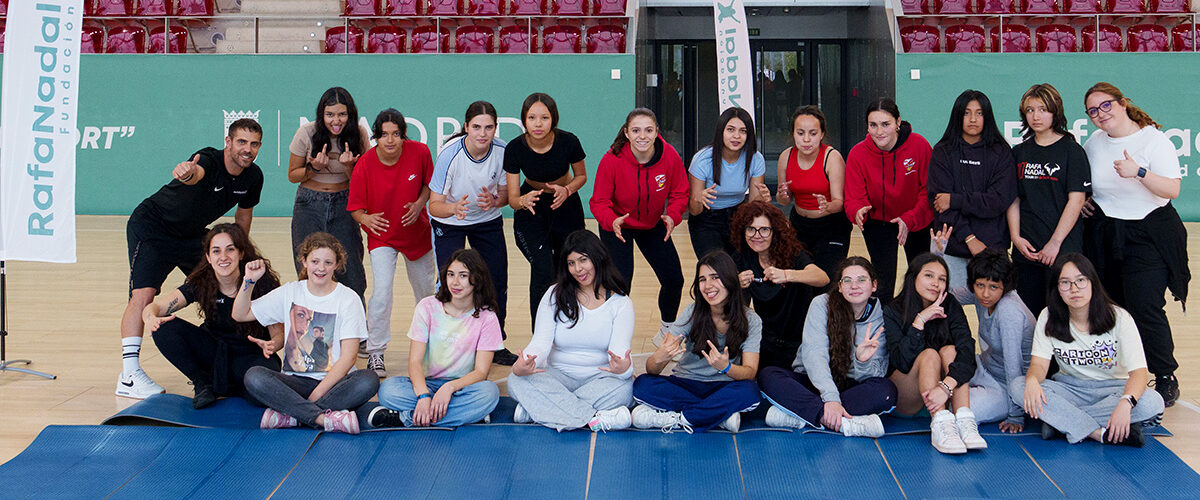
In celebration of March 8, International Women’s Day, the month of March is dedicated to promoting equality across all the centres of the Fundación Rafa Nadal.
Throughout these weeks, different activities are being carried out with a focus on raising the visibility of women’s sport and fostering educational environments that promote personal development and equal opportunities for children and adolescents.
Within this framework, the Olympic Wrestling and Self-Protection activity is being developed at the Madrid centre as part of the actions aimed at promoting equality through sport.
Yesterday, the first of the two planned sessions of this programme took place, carried out in collaboration with the Federación Madrileña de Lucha, with the aim of continuing to encourage girls’ participation in sport as an educational and personal empowerment tool.
The initiative is aimed at 34 girls between 12 and 18 years old, who are users of the socio-educational and sports programmes of the Fundación Rafa Nadal centre in Madrid.
The sessions are held in the afternoon on March 4 and March 11, from 4:00 p.m. to 5:45 p.m., at the multi-sport court of the Caja Mágica, a safe and suitable space for sports practice.
Activity objectives
The Olympic Wrestling and Self-Protection programme combines physical activity, values education and emotional development to provide a safe and motivating sporting experience.
Its main objectives include:
- Fostering respect, discipline, self-control and fair play.
- Promoting equality and safe sports practice.
- Developing basic age-appropriate self-protection skills.
- Enhancing personal confidence, emotional management and cooperation.
- Introducing Olympic wrestling as a regulated sport discipline.
Session content and development
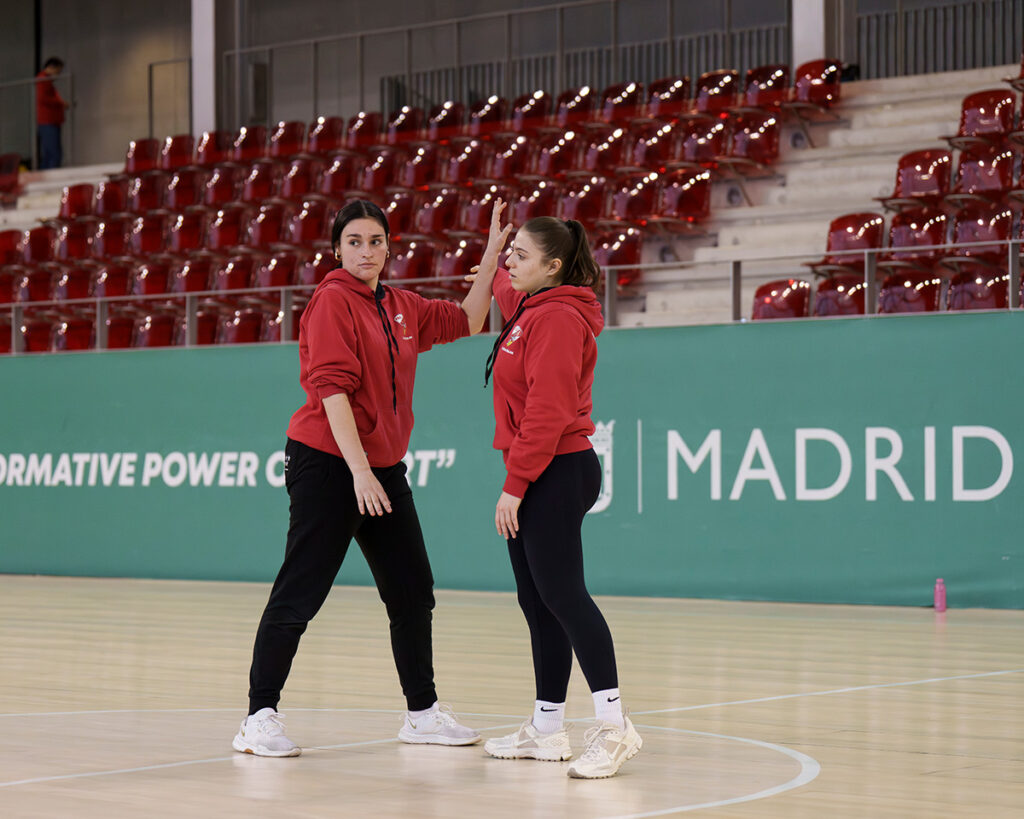
The sessions are being delivered by two qualified coaches from the Federación Madrileña de Lucha, who have experience in sports promotion and socio-educational projects, together with the centre’s educational team, made up of three professionals.
First session: “My body, my space, my safety”
The first session held yesterday had an introductory nature and combined theoretical explanation with practical work.
Olympic wrestling was presented through audiovisual material, and educational values associated with sport were addressed, along with basic safety rules.
The practical part included warm-up activities, controlled opposition games, and initiation to wrestling on the ground and standing, using playful and controlled combat situations.
The contents were aimed at helping participants understand Olympic wrestling as an educational sport, promoting respect towards opponents, emotional self-control and acceptance of rules within sporting practice.
Second session: practical skills and teamwork
The second session will focus on consolidating learning through dynamic games, cooperative exercises and basic practice of two modalities:
- Women’s Olympic freestyle wrestling, working on arm and leg coordination, movement and body control.
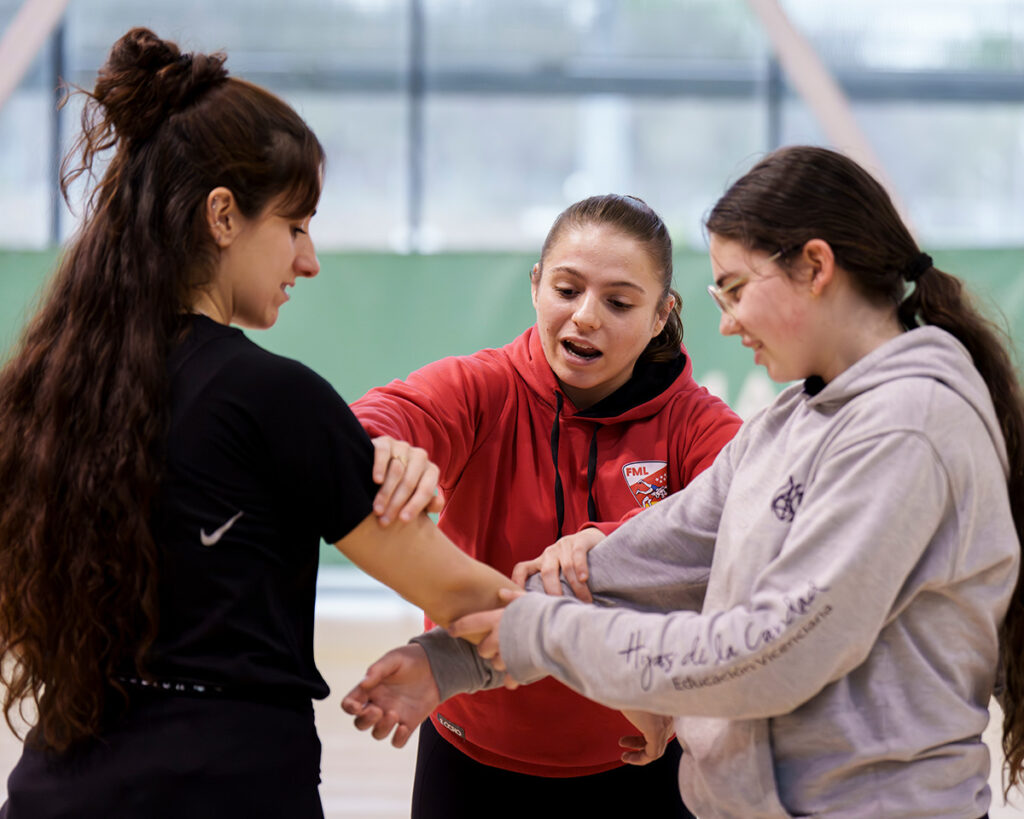
- Self-protection, through simple grip release techniques, prevention of takedowns and development of safe behaviour in public spaces.
At the end of the activity, a group discussion will be held with the participants to share their experience and resolve any questions.
Educational methodology and team
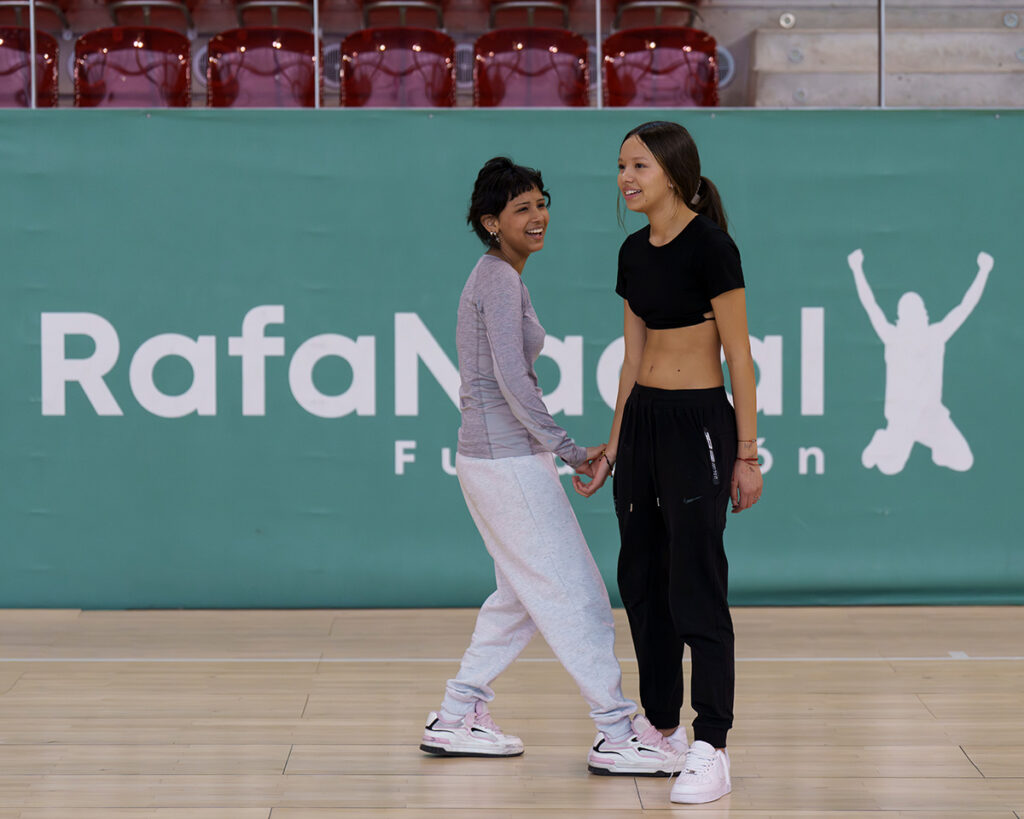
The programme is developed using an active and participatory methodology, prioritising safety, progressive learning and a playful-educational approach.
The project involves three professionals from the centre’s educational team and two specialised coaches from the Federación Madrileña de Lucha, taking place in a safe sports environment.
Commitment to girls’ sport and educational values
Through this initiative, the Foundation continues to promote projects that use sport as a tool for inclusion, education and personal development, offering children and adolescents opportunities to discover new sports disciplines while strengthening their self-esteem and confidence.
The promotion of Olympic wrestling and self-protection skills provides participants with useful resources for their daily life while introducing them to a sport with Olympic tradition and high educational value.